

Saniflo & Macerator Pump Troubleshooting
Having Problems With Your Saniflo or Macerator Pump?
Welcome to our Saniflo troubleshooting and macerator pump repair guide. This page is designed to help you identify common Saniflo problems, diagnose macerator pump faults and find useful information for fixing and repairing macerator systems.
Whether your Saniflo is not working, your macerator keeps running, the pump is making an unusual noise, your toilet is not draining correctly or you suspect a blocked macerator pump, use the troubleshooting guides below to find the problem and learn what to check next.
Saniflo & Macerator Troubleshooting Guides
Select the problem that best matches the symptoms of your Saniflo or macerator pump to view troubleshooting information and helpful videos.
What is Saniflo and How Does a Macerator Pump Work?
Saniflo is a well-known manufacturer of macerator pumps and wastewater pumping systems. A macerator pump provides a practical way of installing certain bathroom facilities where conventional gravity drainage is difficult or where the existing soil or waste pipe is some distance away.
A toilet macerator typically works by receiving waste and water into the unit before a cutting mechanism breaks down the waste. The pump then moves the wastewater through a smaller discharge pipe towards the property's drainage system.
Although toilet macerator pumps are one of the most familiar applications, different macerator and wastewater pump models can also be designed to accept connections from appliances such as basins, showers, baths, kitchen sinks and utility-room appliances. Always check the specifications of the individual pump because the permitted connections vary between models.
This Saniflo troubleshooting and macerator troubleshooting guide covers common problems including pumps that will not stop running, pumps starting by themselves, wastewater backing up, unusual buzzing or vibration, blockages and other common macerator pump faults.
Only attempt troubleshooting or maintenance that you are competent and confident to carry out safely. Always isolate the electrical supply before opening or working on a macerator pump. Never place your hands near the cutting mechanism. If you are unsure about a repair, electrical fault or internal component, contact a suitably qualified macerator or Saniflo service engineer.
Why Won't My Saniflo Turn Off or Stop Running?
A Saniflo that keeps running continuously is one of the more common macerator problems. If the motor continues operating after the toilet has finished flushing, there may be a blockage, water continually entering the unit, a problem with the non-return system, a pressure-switch issue or another internal fault.
Before investigating the macerator itself, check that a connected toilet, tap or other appliance is not continually allowing water into the unit.
A foreign object or accumulated material may interfere with the macerating mechanism. After safely isolating the electrical supply, the unit may need to be inspected for an obstruction. Where appropriate for the particular model, an accessible obstruction can be carefully removed using a suitable tool such as pliers. Never put your fingers near the cutting mechanism.
A blockage affecting the pump or impeller can prevent the unit from clearing wastewater correctly. Internal pump or motor removal should only be carried out by someone competent to work on the unit and with the electrical supply fully isolated.
A restriction in the discharge pipe can prevent wastewater from leaving the macerator correctly. Wastewater may be pumped away and then partially return to the unit.
A foreign object may also interfere with the non-return valve. The valve and accessible discharge components should be checked for obstructions. If the valve itself is damaged or no longer sealing correctly, replacement may be required.
If the switching mechanism incorrectly detects that the tank still contains water, the macerator may continue running even when pumping should have stopped. The tank and pressure-switch system may require inspection, cleaning or servicing.
The rubber membrane forms part of the system used to detect water levels and activate the pump on relevant models. If the membrane becomes damaged, contaminated or fails to operate correctly, the switching mechanism can malfunction.
A damaged membrane or associated switch may require replacement. If you are unsure how to diagnose the component safely, use a qualified repair engineer.
Why Does My Saniflo Keep Starting on Its Own?
If your Saniflo randomly starts by itself during the day or night when nobody is using the toilet or connected appliances, something may be causing the macerator to detect water or pressure inside the unit.
Microswitch or Pressure-Switch Activation
A switching fault can make the pump behave as though the tank is full even when there is little or no wastewater to remove. Waste, contamination or another problem around the switching system may interfere with normal operation.
Check for Water Entering the Macerator
Before assuming that the pump itself has failed, check whether water is slowly entering the Saniflo. A dripping tap, toilet cistern continually passing water or another connected appliance can introduce enough water to periodically activate the macerator.
Where a boiler condensate connection or another water source is connected to the system, this should also be considered when investigating unexpected activation.
Why is My Saniflo Backing Up Into the Bath, Shower or Basin?
If wastewater is backing up into a shower, bath or basin connected to a Saniflo, the macerator system may not be removing water as quickly as it is entering the unit.
This can indicate a macerator blockage, restricted discharge pipe, pump problem, non-return valve issue or an installation problem affecting the connected waste pipes.
Stop using the connected appliances until the cause has been identified. Continuing to send water into a system that is not discharging correctly can increase the risk of wastewater overflowing.
✓ Check for obvious restrictions or blockages.
✓ Check the discharge pipe for restricted flow.
✓ Check the non-return valve where appropriate.
✓ Check that connected waste pipes are installed with the correct fall.
✓ Check that the installation matches the requirements for your specific pump model.
Why is My Saniflo Making a Buzzing or Vibrating Noise?
A Saniflo making a buzzing, humming or unusual vibrating noise when the toilet is flushed can indicate that the motor is trying to operate but the macerating mechanism or pump is being restricted.
One possible cause is a foreign object trapped around the macerator blade or cutting mechanism. Objects that should never have entered the toilet can prevent the mechanism from rotating normally and may produce a loud buzzing or vibration.
Switch off and isolate the electrical supply. Never place your fingers or hands near the macerator blade or cutting mechanism, even when the pump appears to be switched off.
Check for an Obstruction
If your particular model allows safe service access, inspect the accessible cutting area for an obvious foreign object. A visible obstruction may be carefully removed using an appropriate tool such as pliers while the electrical supply remains isolated.
If there is no obvious obstruction, or the motor continues to buzz without pumping correctly after the obstruction has been cleared, stop using the unit and have the pump inspected. Continuing to run a jammed motor can potentially cause further damage.
Why is My Saniflo Leaking When It's Running?
A Saniflo leaking while running or water escaping from around the vent can indicate that wastewater is not being discharged correctly. Possible causes include a build-up of waste, a worn rubber membrane or microswitch, a deteriorated waste outlet, or a macerator motor that is no longer pumping efficiently.
A significant build-up of waste inside the unit can restrict normal operation and contribute to water escaping from the vent. The macerator may need to be safely cleaned and the accumulated waste removed.
A worn rubber membrane or microswitch can prevent the macerator from activating at the correct time. Water may continue accumulating before the pump eventually starts, potentially causing water to escape through the vent.
If the rubber membrane is faulty, it may need replacing. If replacing the membrane does not resolve the problem, the microswitch may also require replacement.
An older or worn motor may no longer pump wastewater away as efficiently as it once did. If the motor is reaching the end of its service life, replacing the complete macerator may be more appropriate than attempting further repairs.
The rubber waste outlet can deteriorate or shrink over time. Excessive or unsuitable toilet-cleaning chemicals may contribute to deterioration of rubber components.
If water is spraying or escaping around the vent or outlet area, inspect the rubber connections for signs of damage. A damaged waste outlet should be replaced.
Why Does My Saniflo Keep Tripping the Electrics?
If your Saniflo keeps tripping the electrics, circuit breaker, RCD or other electrical protection, stop using the macerator until the fault has been investigated.
Electrical tripping can indicate water entering an electrical component, a damaged motor seal, a wiring fault or a problem with the macerator motor. The electrical protection may be disconnecting the circuit because a fault has been detected.
Do not repeatedly reset the electrical supply if the Saniflo continues to trip it. Switch off and isolate the macerator. Electrical faults, damaged seals, wiring and internal motor problems should be investigated by a suitably qualified person.
If a motor seal has failed and moisture is reaching electrical components, the unit should remain isolated until it has been professionally inspected and repaired or replaced.
A deteriorating motor can also cause an electrical fault. Depending on the model, age and condition of the macerator, replacement of the complete unit may be more practical than repairing a severely damaged motor.
Why Does My Saniflo Smell? How to Stop Macerator Odours
A bad smell coming from a Saniflo or macerator pump can be caused by deposits and waste accumulating inside the unit. Water normally remains within parts of the macerator system, and over time limescale, waste and other deposits can contribute to unpleasant odours.
Is the Smell Actually Coming From the Saniflo?
First establish whether the odour is coming from the macerator itself rather than another waste pipe or drain. After normal use, safely isolate the unit and check whether the same odour is noticeable around the macerator's vent area.
Descaling a Saniflo Macerator
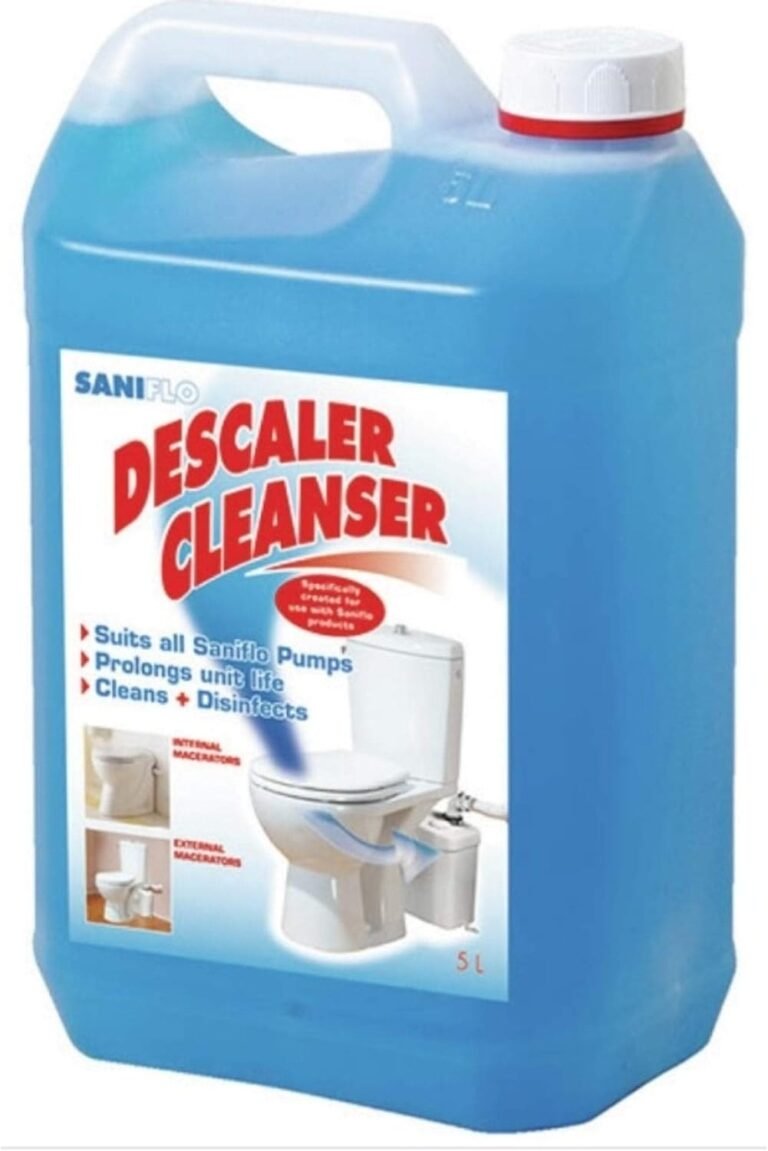
Periodic macerator cleaning and descaling can help remove limescale and deposits from inside the system. Always use a cleaning or descaling product that is suitable for macerator pumps and follow the manufacturer's instructions carefully.
If a macerator has not been cleaned or descaled for a long period, more than one treatment may be required to gradually remove accumulated deposits.
How to Clean & Descale a Macerator Pump at Home
Regular macerator pump cleaning and descaling can help reduce limescale, waste deposits and unpleasant smells while keeping the internal components cleaner.
The correct cleaning procedure depends on the make and model of the macerator, so always check the manufacturer's instructions before using any cleaning or descaling product.
✓ Follow the dosage and treatment instructions supplied with the product.
✓ Avoid unsuitable or excessively aggressive chemicals that could affect rubber seals and internal components.
✓ Older units with significant limescale build-up may require repeated treatment.
✓ If the macerator remains blocked or performs poorly after cleaning, further troubleshooting may be required.
What Can Cause a Saniflo Macerator to Break?
Saniflo toilet macerators are designed to provide reliable wastewater pumping, but incorrect use, blockages and poor maintenance can contribute to Saniflo problems and macerator pump failure.
Avoiding some of the most common causes of macerator damage can help reduce blockages, unnecessary strain on the motor and premature failure.
Excessive amounts of toilet paper can contribute to a blocked Saniflo or blocked macerator pump. Items that are not designed to be flushed can cause much more serious problems.
Avoid flushing baby wipes, sanitary products, kitchen roll, nappies, cotton products or other foreign objects. These materials can become trapped around the cutting mechanism or pump and may cause a blockage or damage.
Waste deposits and limescale can accumulate inside a macerator over time. Units that receive little use may also be more susceptible to deposits remaining inside the system.
Appropriate periodic cleaning and descaling can help keep the internal system cleaner. Always use products suitable for macerator pumps and follow the manufacturer's instructions.
A Saniflo macerator requires electricity to operate its motor and pump. During a power cut, the macerator cannot pump incoming wastewater away.
Avoid using the toilet or other fixtures connected to the macerator until electrical power has been restored, as additional wastewater may accumulate inside the system.
Foreign objects can jam the macerating mechanism or pump. If the motor attempts to operate while the mechanism is jammed, it can place additional strain on the unit.
If your Saniflo suddenly begins humming, vibrating or stops pumping correctly, stop using it and investigate the fault rather than repeatedly attempting to operate the pump.
Why Does My Saniflo Stop Halfway Through a Cycle?
A Saniflo that starts but then stops during a pumping cycle may be experiencing overheating or excessive resistance within the pump. On units fitted with thermal protection, the motor may stop operating when it becomes too hot.
Possible causes include a jammed macerator mechanism, restricted pump or discharge pipe, unusually hot incoming water, or a motor that is beginning to deteriorate.
Stop using the connected toilet or appliances and isolate the electrical supply. Allow the motor to cool before any further investigation.
If thermal protection has operated, the motor will need time to cool before it can operate normally again. Do not repeatedly attempt to restart an overheating macerator.
With the electrical supply safely isolated, check accessible service areas for an obstruction. A foreign object around the macerator mechanism or pump can increase the load on the motor and cause it to overheat.
Different macerator models have different maximum permitted incoming water temperatures. Do not discharge water into the pump above the temperature specified for your particular model.
If the Saniflo repeatedly stops during normal operation after blockages and installation problems have been ruled out, the motor or another internal component may require professional inspection.
Why is My Saniflo Overheating or Getting Very Hot?
A Saniflo macerator overheating can indicate that the motor is working harder or for longer than it should. Common causes can include a jammed macerator, blocked discharge pipe, restricted wastewater flow or excessive incoming water temperature.
If the macerator becomes unusually hot or repeatedly stops, switch off and isolate the electrical supply. Allow the unit to cool completely before attempting any safe inspection.
Foreign objects, excessive waste or deposits can restrict the macerating mechanism or pump. A motor attempting to operate against an obstruction may become hot.
Once the electrical supply has been safely isolated, an accessible obstruction may be removed with a suitable tool such as pliers. Never put your hands near the cutting mechanism.
Macerator pumps have specified maximum incoming water temperatures, which vary by model. Excessively hot wastewater from a bath, sink or appliance should not be discharged into a unit that is not rated for that temperature.
Always check the specifications for your particular Saniflo or macerator pump rather than assuming all models accept the same water temperature.
If wastewater cannot leave the macerator freely, the pump may run for longer and place additional load on the motor.
Check accessible discharge pipework for restrictions, incorrect routing or freezing during very cold weather. Any pipework changes should comply with the installation requirements for the specific pump.
Why Won't My Saniflo Start or Activate?
If your Saniflo is not working or won't activate when the toilet is flushed or water enters the unit, there are several possible causes. These range from a simple power-supply problem to a blocked pressure system, damaged membrane, faulty microswitch or jammed motor.
First check that electrical power is available to the macerator. Check the relevant fused connection or electrical protection.
If the electrical supply repeatedly trips when the macerator is connected, do not continually reset it. Refer to the electrical troubleshooting section above and have the fault investigated.
On systems that use air pressure to operate the internal membrane and switch, a blocked pressure or breather passage can prevent the pump from detecting the rising water level correctly.
Where the manufacturer's servicing instructions permit it, the accessible passage can be inspected and carefully cleared.
The membrane forms part of the activation system on relevant macerator models. Water, waste or limescale around the membrane can interfere with its operation, while a damaged membrane may no longer activate the switch correctly.
A damaged membrane may require replacement.
If the pressure system is working but the microswitch fails to operate, the signal to start the motor may not be sent. Electrical testing and switch replacement should be carried out by someone competent to work safely on the unit.
A foreign object can prevent the macerator mechanism from rotating. If the unit hums, buzzes or becomes unusually hot but does not pump, switch it off rather than repeatedly attempting to run it.
Once the electrical supply is safely isolated, the macerator can be checked for an accessible obstruction in accordance with the servicing instructions for the particular model.
How to Unblock a Saniflo or Blocked Macerator Pump
A blocked Saniflo or macerator pump can cause slow drainage, unusual noises, wastewater backing up, continuous running or a macerator that will not pump correctly.
Common causes include excessive toilet paper, wipes, sanitary products, dental floss and other foreign objects becoming trapped around the macerating mechanism, pump or discharge system.
Completely isolate the electrical supply before opening, disconnecting or putting tools inside a macerator. Never put your fingers or hands near the cutting mechanism.
Depending on the Saniflo model and installation, an obstruction may be accessible through a service opening or connection point.
Follow the servicing instructions for your specific macerator before disconnecting toilet connectors, pipework or covers.
With the electrical supply safely isolated, visible foreign material may be carefully removed with a suitable tool such as long-nose pliers.
Dental floss, wipes, sanitary products and other fibrous materials can become wrapped around the macerating mechanism.
If the macerating mechanism appears jammed, check for material preventing it from moving. Do not force the mechanism or use your hands to attempt to free it.
If no obvious blockage is accessible, the obstruction may be around the pump, discharge connection or non-return valve. Further dismantling should only be attempted in accordance with the instructions for the specific model and by someone competent to carry out the work safely.
Saniflo & Macerator Cleaning, Descaling & Maintenance
Regular Saniflo cleaning and macerator pump maintenance can help control limescale, waste deposits and unpleasant odours while keeping the internal system cleaner.
How often a macerator needs descaling will depend on factors including usage and local water hardness. Hard-water areas can produce limescale more quickly, so more frequent maintenance may be beneficial.
How to Descale a Macerator Pump
Follow the cleaning instructions for your particular pump and descaling product. Where instructed, isolate the electrical supply before beginning the treatment.
Add the specified amount of a suitable macerator cleaning and descaling solution according to the instructions supplied with the product.
Leave the solution inside the system for the treatment period stated by the descaler manufacturer. Do not use the connected facilities during the treatment period where the instructions advise against it.
Once the recommended treatment period has finished, follow the product instructions for reconnecting the pump and thoroughly flushing the solution through the system.
Where Can I Buy a Saniflo or Replacement Macerator Pump?
If your existing macerator cannot be repaired or you are planning a new installation, you can browse our range of Saniflo macerator pumps and replacement macerator systems online.
Our macerator pump range includes popular Saniflo toilet macerators for different bathroom applications, alongside the SLIMFLO Saniflo replacement alternative.
Before purchasing a replacement macerator, check the number and type of appliances you need to connect, the required inlet positions, discharge pipe size and the vertical and horizontal pumping requirements of your installation.
How Do You Install a Saniflo or Macerator Pump?
Correct Saniflo installation and macerator pump installation is important for reliable operation. Incorrect pipe sizes, unsuitable pipe routing, insufficient fall or exceeding the pump's permitted vertical and horizontal distances can lead to drainage and pumping problems.
Installation requirements vary between Saniflo and macerator models. Always follow the instructions for the exact pump being installed rather than using one set of measurements for every macerator.
Our Saniflo and macerator installation guides provide model-specific information, diagrams, connection sizes, pumping distances and installation guidance for popular pumps.
✓ Check inlet and discharge pipe sizes
✓ Check maximum vertical and horizontal pumping distances
✓ Follow the required pipe gradients and routing
✓ Follow the electrical requirements for the specific model
✓ Use the manufacturer's installation instructions
SANIFLO & Macerator Pump & Parts Finder
Find SANIFLO parts, SANIFLO spare parts, macerator pump parts, membranes, motor components, capacitors, carbon filters, replacement blades, non return valves, rubber inlet connectors, toilet connectors, SANIFLO descaler, pipe fittings and accessories, or find a suitable replacement macerator pump.